Last updated October 30, 2026
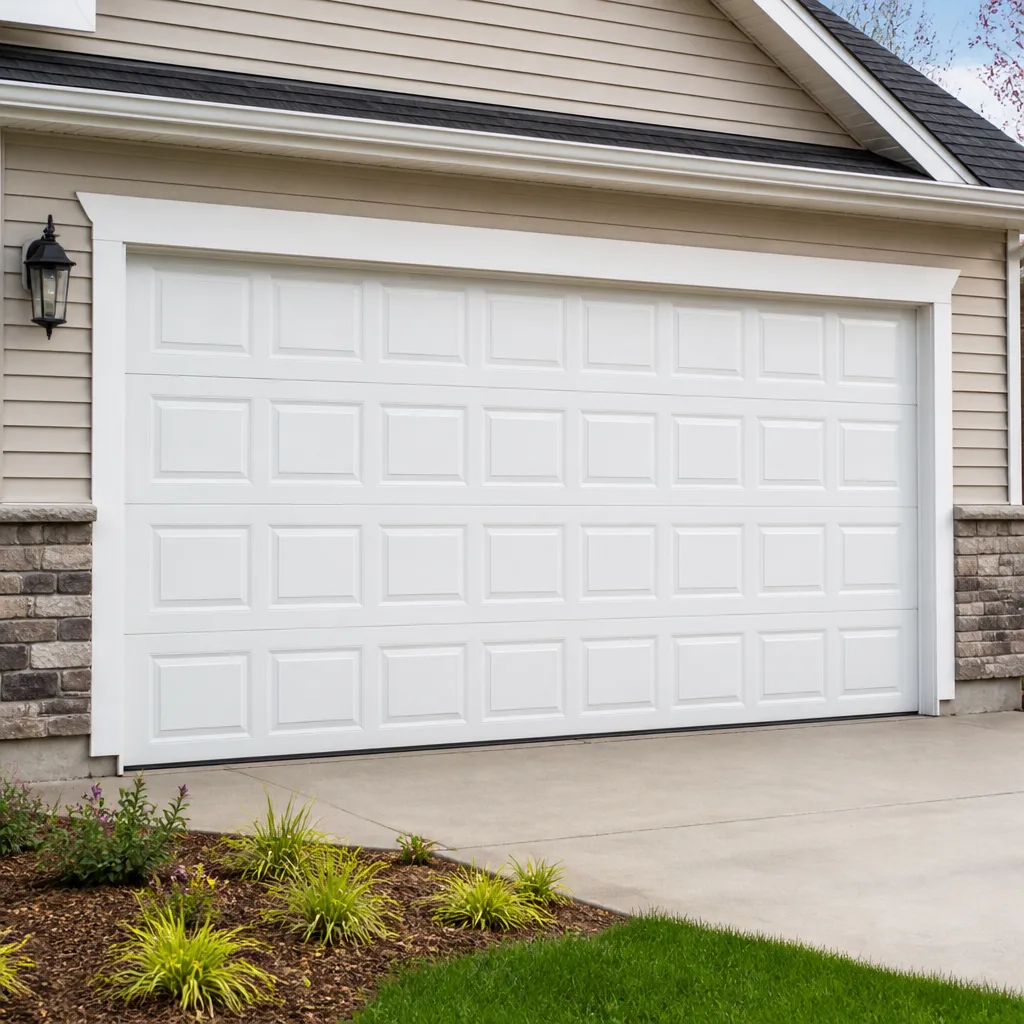 Raised-panel steel
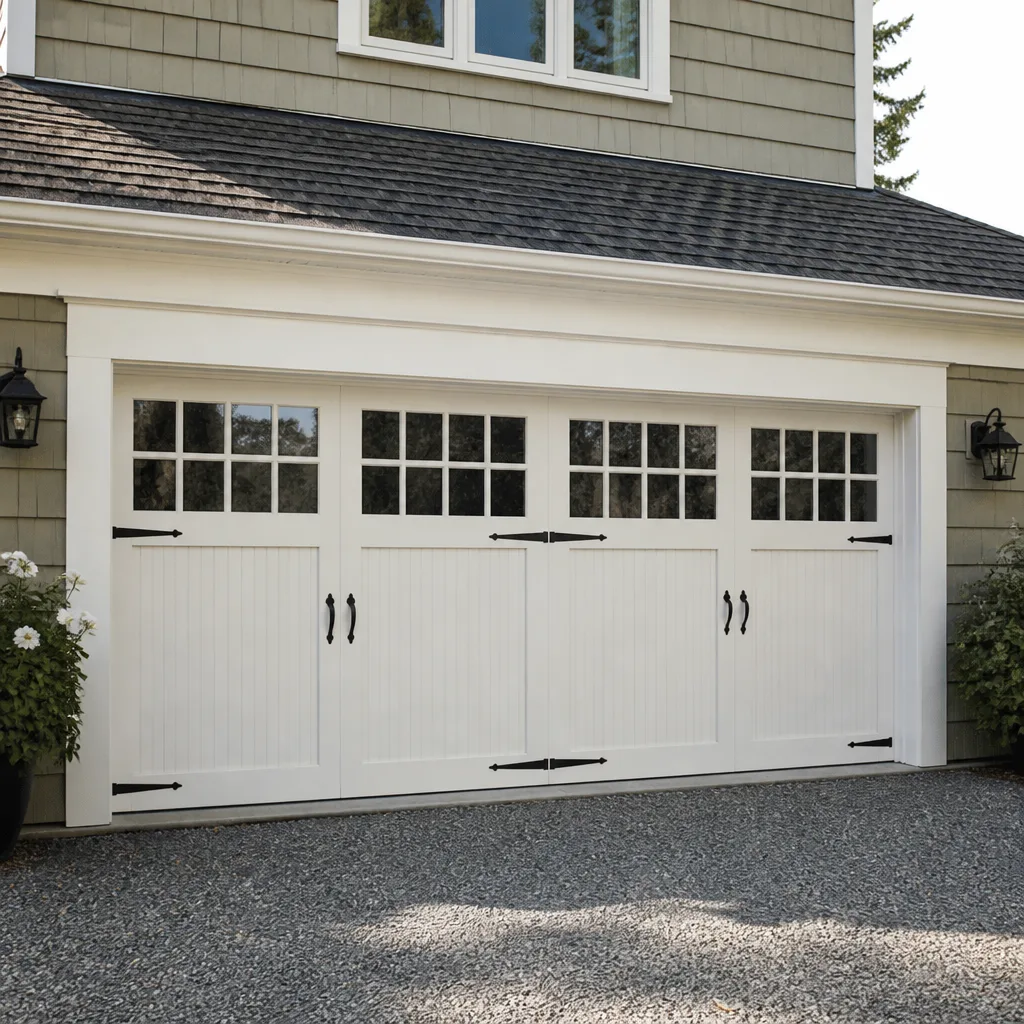 Carriage house
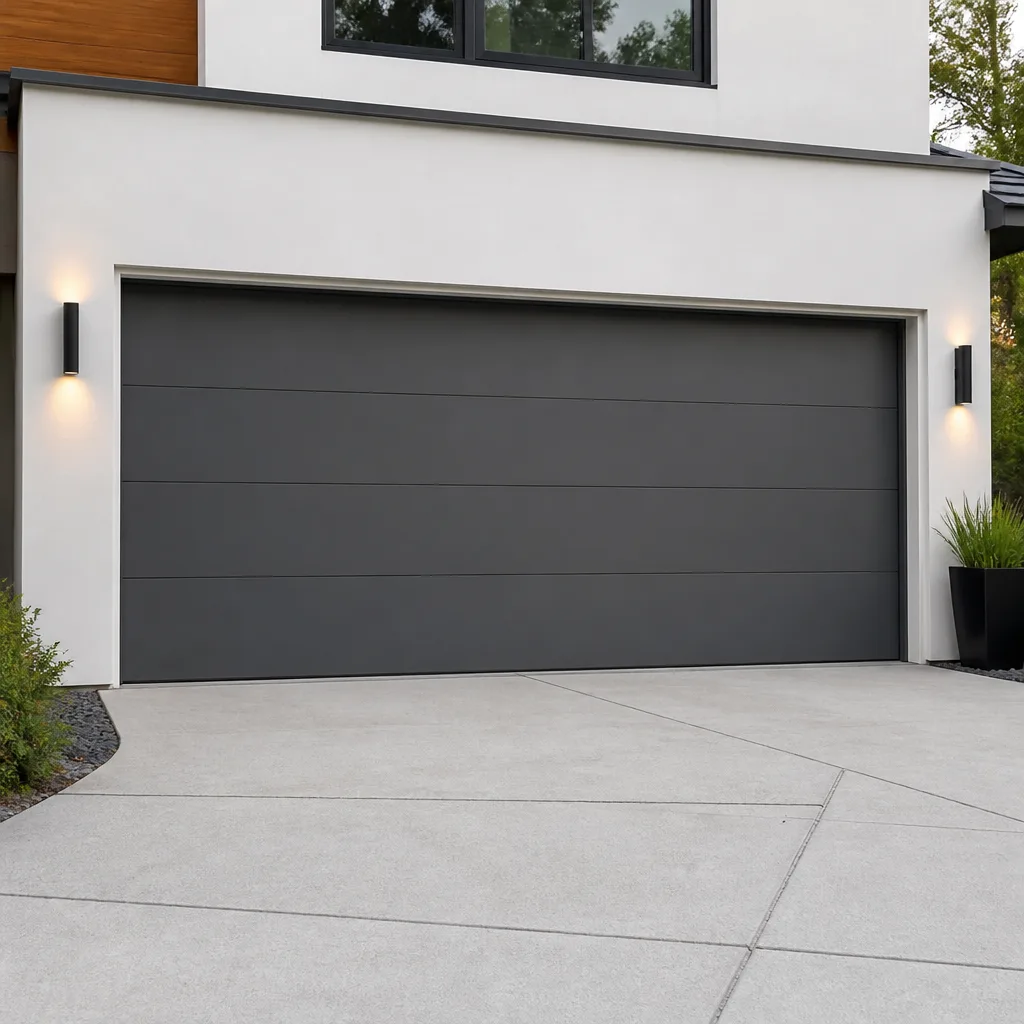 Modern flush
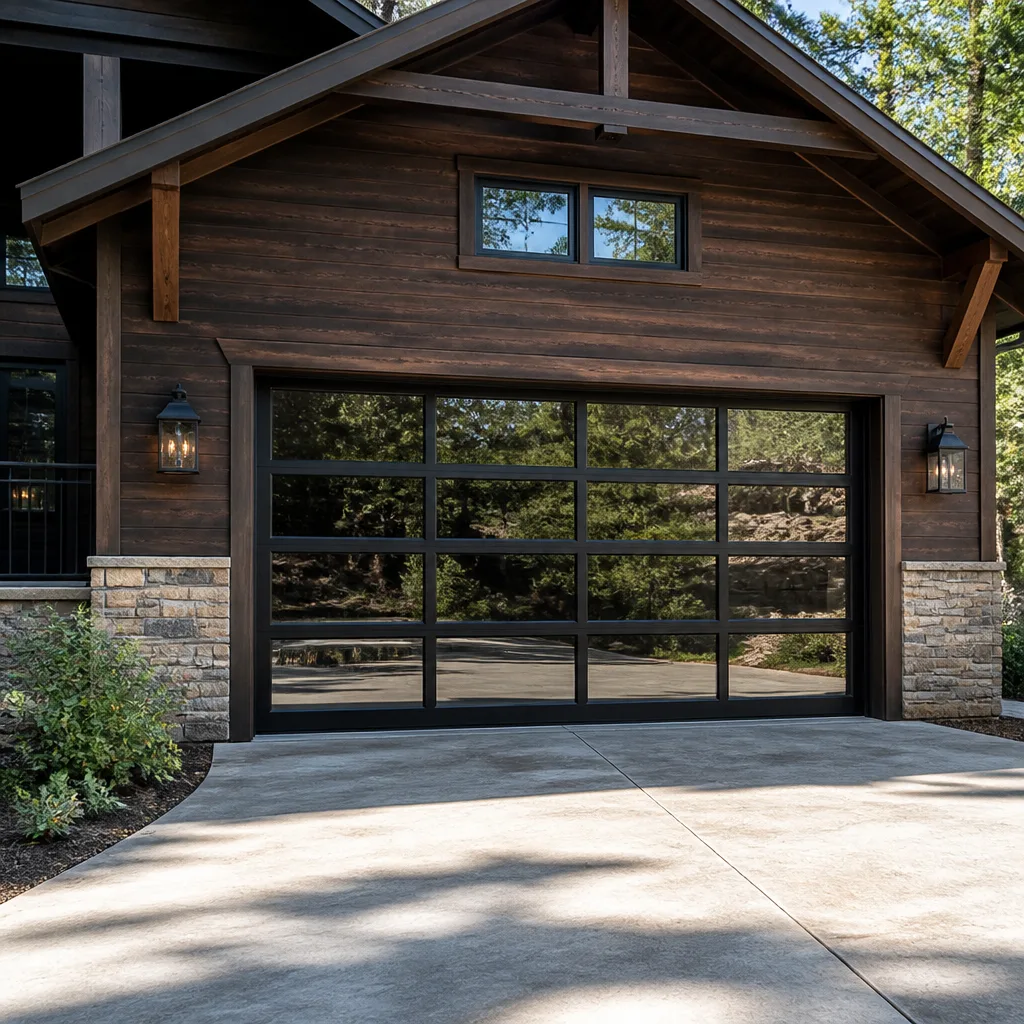 Full-view glass
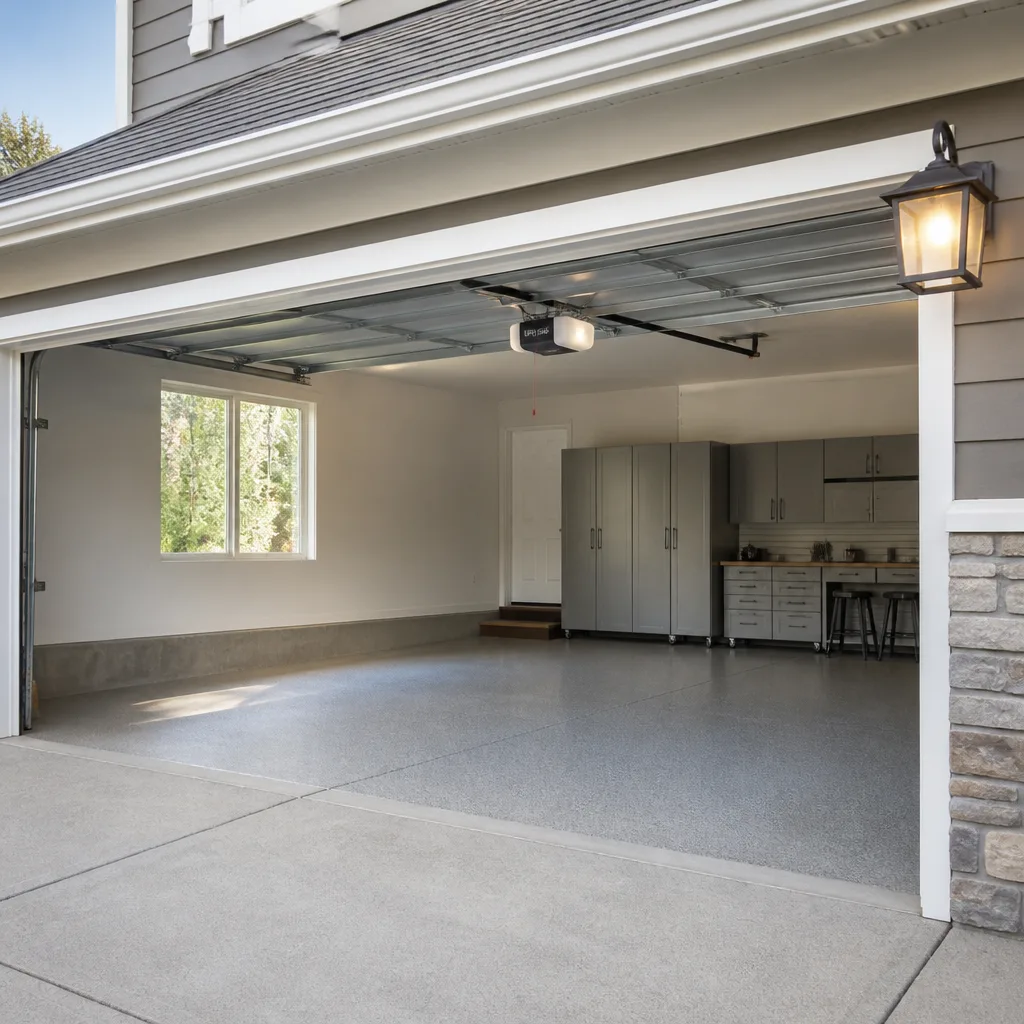 LiftMaster openers
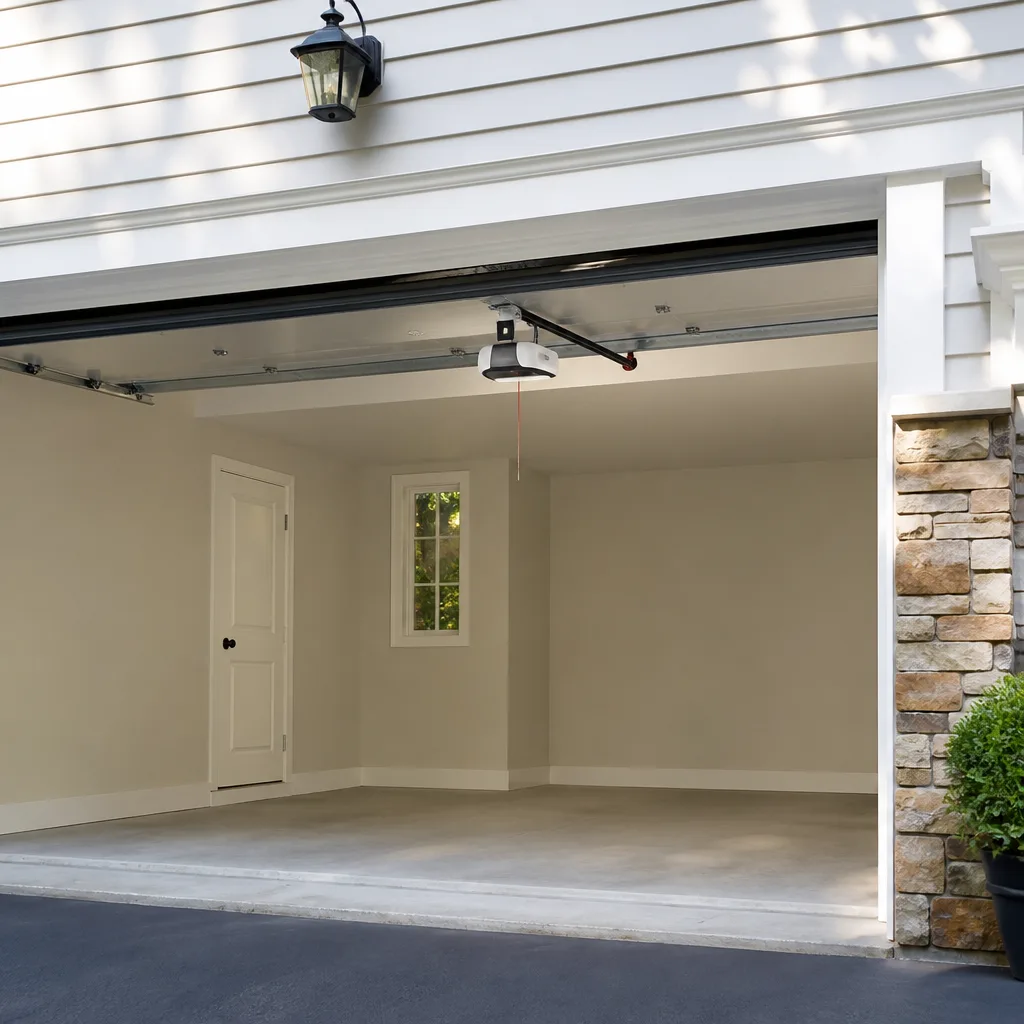 Chamberlain openers
Full 25-point door and opener safety check with every visit - springs, cables, rollers, tracks, and your LiftMaster or Chamberlain opener included
You get a price before we start. It does not change when the truck arrives.
Get your free estimateThe Complete Garage Door Repair Guide for West Palm Beach Homeowners
Florida’s humidity causes garage door hardware to corrode up to three times faster than the national average, yet most online repair guides never mention salt air corrosion once. They’re written for Ohio winters and Arizona dry heat. This guide is different. It’s built specifically around what West Palm Beach homeowners actually face: salt-laden air off the Atlantic, a six-month rainy season, hurricane wind-load requirements, and hardware that fails in ways a Minnesota garage door never will. You’ll learn which repairs are universal fixes and which ones are local code issues, what actually causes the breakdown you’re dealing with, and when Garage Door Repair by a specialist saves you money instead of costing it.
Quick Answer
Most garage door repairs in West Palm Beach cost between $125 and $550 depending on the component, with spring replacement typically running $180 to $340 and opener repair averaging $150 to $400. The most common local failure points are corroded torsion springs, rusted cables, and humidity-damaged opener circuit boards. For anything involving springs under tension or hurricane-code door specifications, call a garage door specialist rather than attempting a DIY fix.
Styles & brands we work with
Table of Contents
- How South Florida Humidity Attacks Your Garage Door
- The 7 Most Common Garage Door Repairs in West Palm Beach
- What Garage Door Repair Costs in West Palm Beach
- Florida Building Code: What West Palm Beach Homeowners Must Know
- Seasonal Repair Patterns: Rainy Season vs. Dry Season
- Documenting Repairs for Insurance and Hurricane Claims
- What You Can Safely Check Yourself (And What You Shouldn’t Touch)
- Common Mistakes to Avoid
- When to Call a Professional
- Frequently Asked Questions
How South Florida Humidity Attacks Your Garage Door
A garage door in West Palm Beach lives in an environment that would be considered a stress test anywhere else. Between May and October, relative humidity sits above 70% most days. Salt particles blow in from the Atlantic, settle on metal surfaces, and combine with moisture to create a corrosive microclimate that works on your hardware every single hour of the year. We’ve pulled apart doors in Loxahatchee Groves where the torsion springs looked like they’d been submerged in seawater, yet the homeowner never lived within sight of the ocean. That’s the reality of semi-rural Palm Beach County: standing moisture from irrigation, canal proximity, and dense vegetation creates the same corrosion risk as coastal frontage.
Here’s what breaks down first, in order of how often we see it:
- Torsion springs: Surface rust creates micro-pitting that concentrates stress. A spring rated for 10,000 cycles may snap at 4,000 in West Palm Beach’s humidity. The failure is sudden and loud, often described by homeowners as “a gunshot in the garage.”
- Lift cables: Galvanized cable coating erodes, exposing the steel core. Fraying follows within months. A cable that parts under load drops the door unevenly, which can bend tracks and damage panels if not addressed quickly.
- Hinges and rollers: The constant expansion and contraction of metal hinges in humid air accelerates wear on roller bearings. Nylon rollers hold up better than steel in this climate, but the hinge plates themselves still corrode.
- Opener circuit boards: Condensation inside the motor housing is a leading cause of opener failure here. Boards short out, capacitors swell, and logic boards show corrosion blooms that simply don’t happen in dry climates.
- Bottom seals and weatherstripping: Rubber and vinyl seals degrade faster in UV-intense, high-humidity conditions. A cracked bottom seal lets standing water in during afternoon thunderstorms, which then accelerates rust on the track brackets.
Understanding this failure pattern matters because it changes what “maintenance” means in West Palm Beach. A homeowner in Phoenix can ignore their garage door for a decade. Here, an annual hardware inspection catches corrosion before it becomes a spring snapping at 6 a.m. on a workday. We recommend galvanized or stainless hardware replacements where possible, and we’ll explain why that matters for Loxahatchee Groves specifically later in this guide.
The 7 Most Common Garage Door Repairs in West Palm Beach
Not all garage door repairs are created equal, and the repair you need depends on what’s failing, what brand is installed, and how old the system is. Here are the seven repairs we handle most frequently in West Palm Beach, ranked by how often we see them.
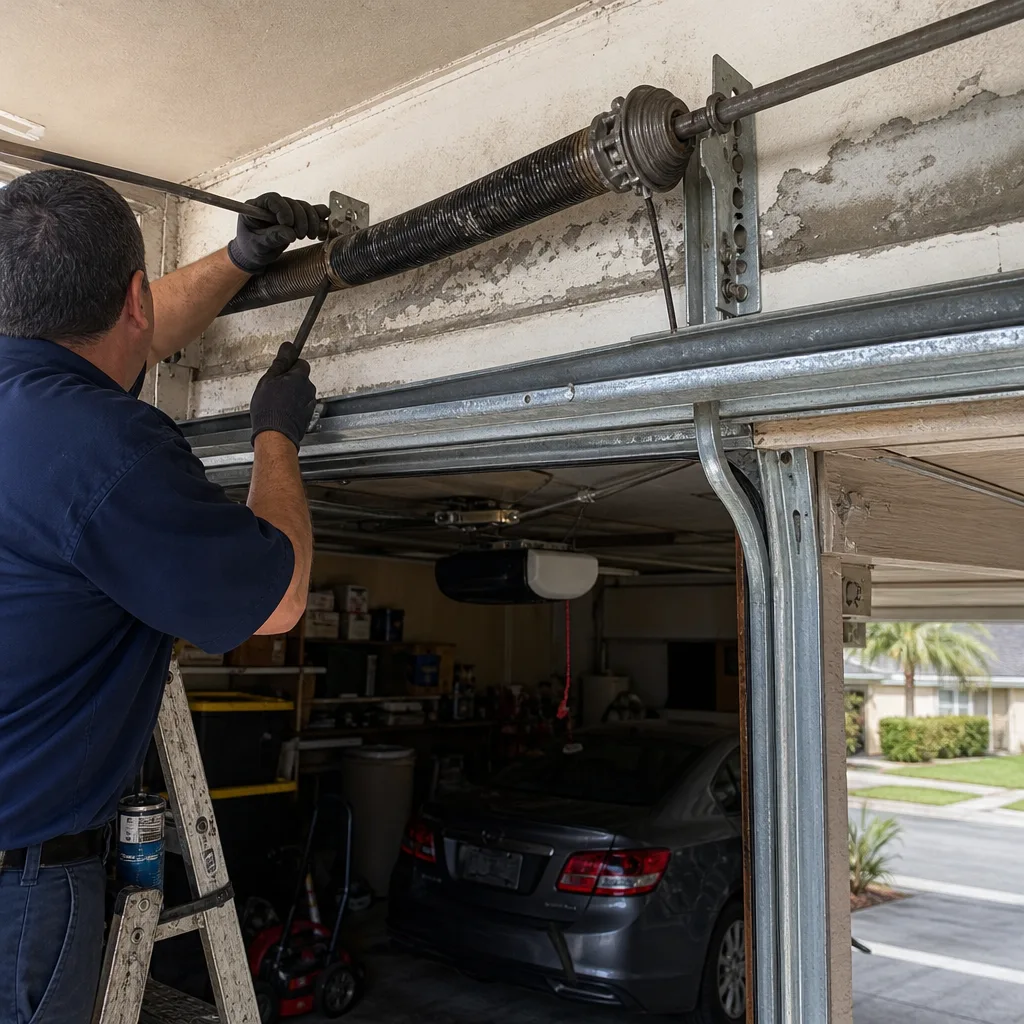
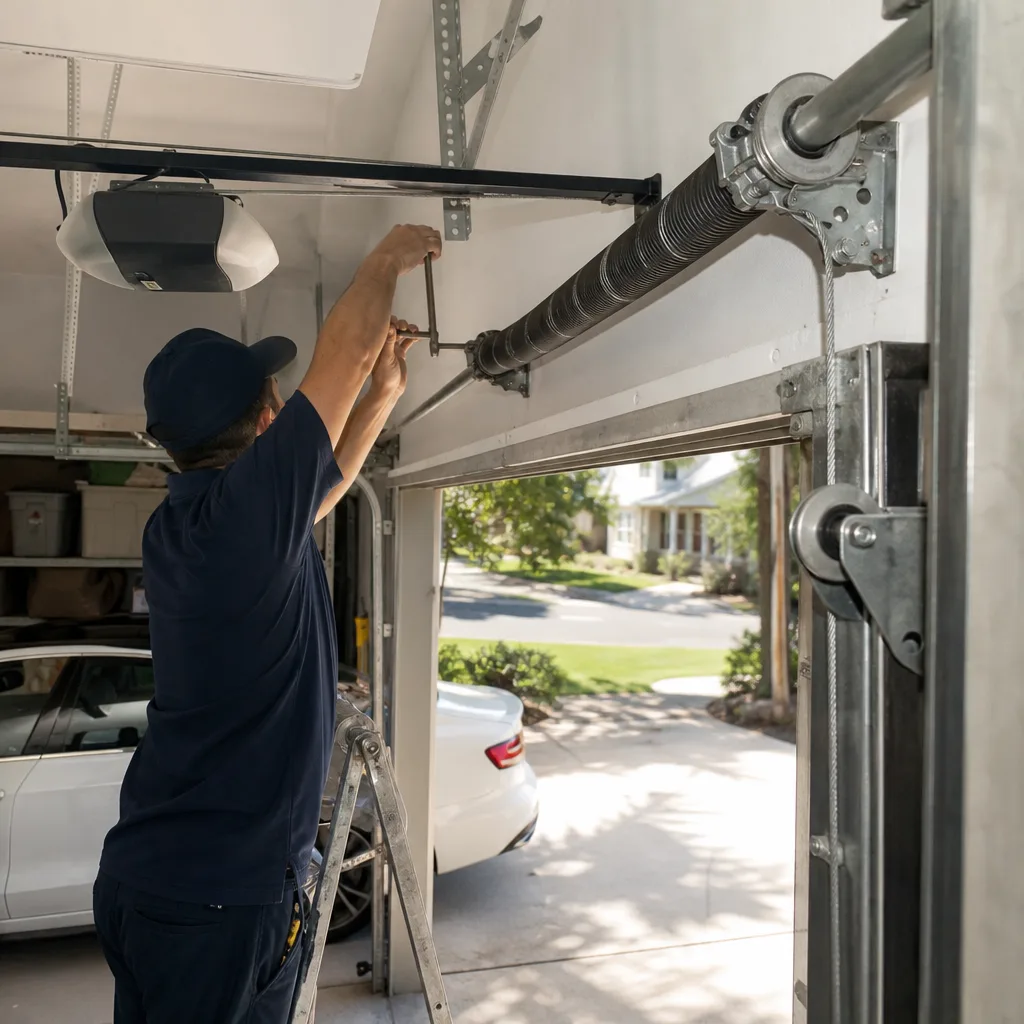
1. Broken Torsion Spring Replacement
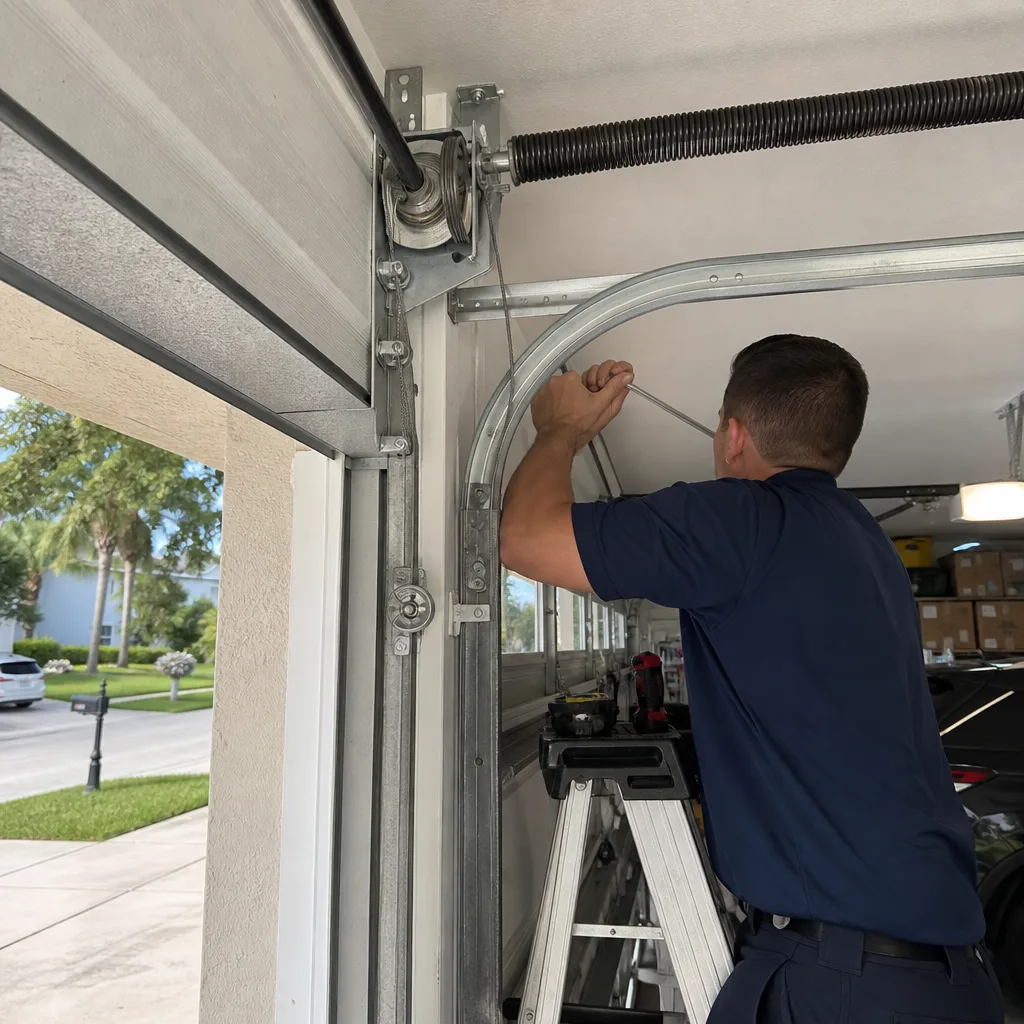
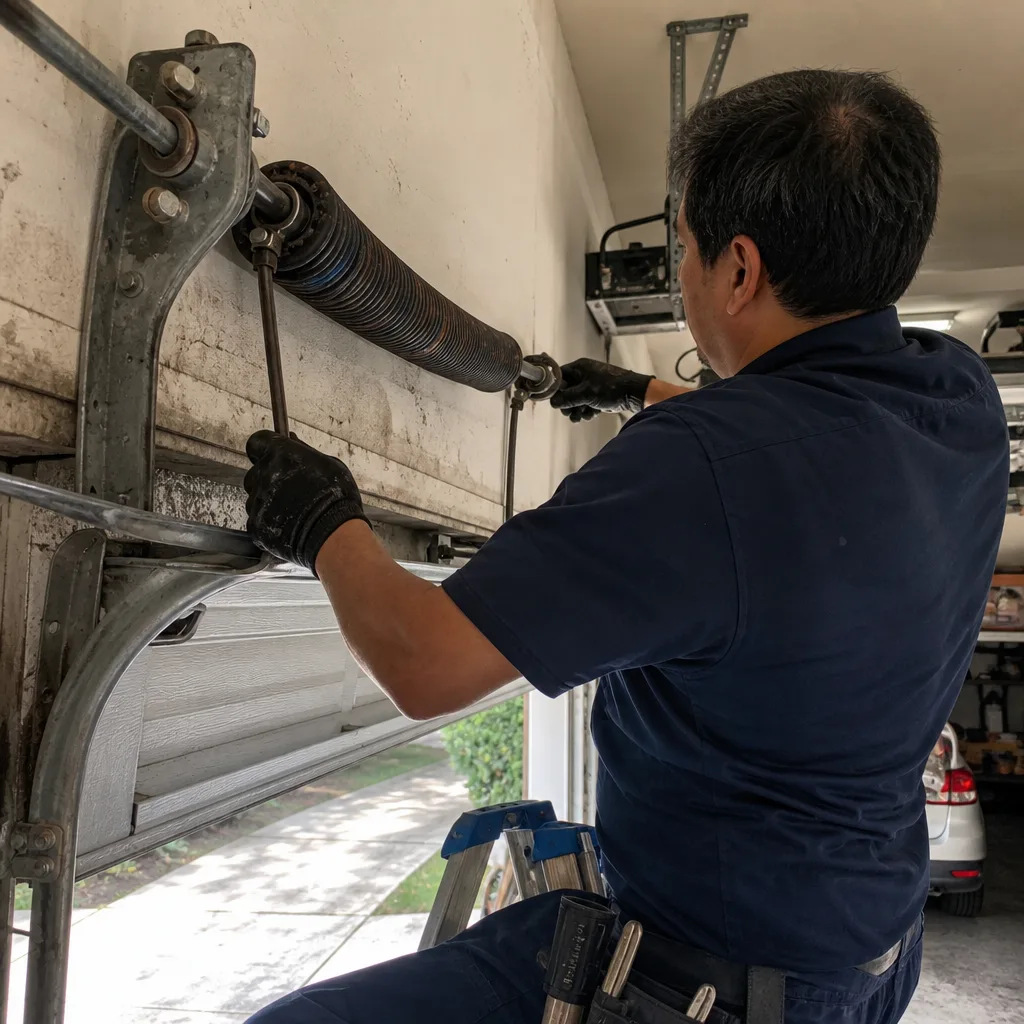
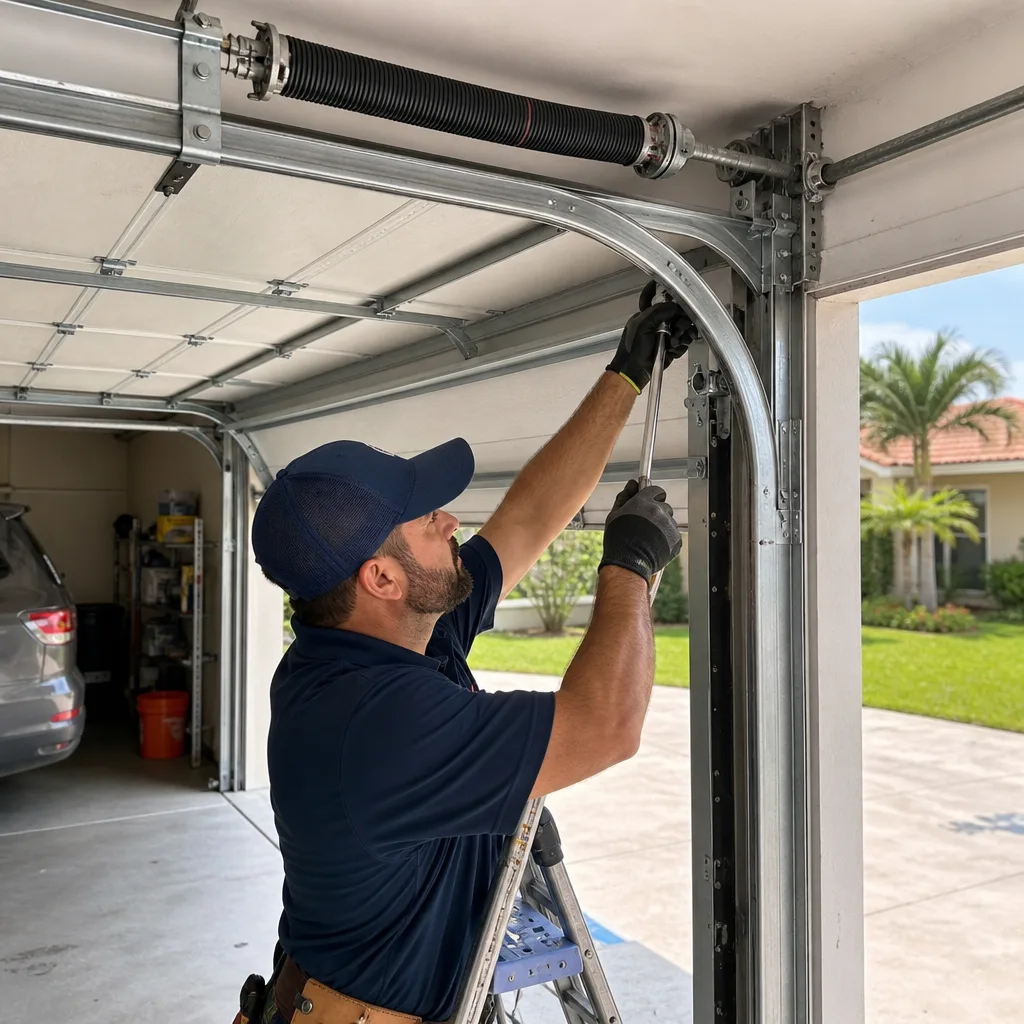
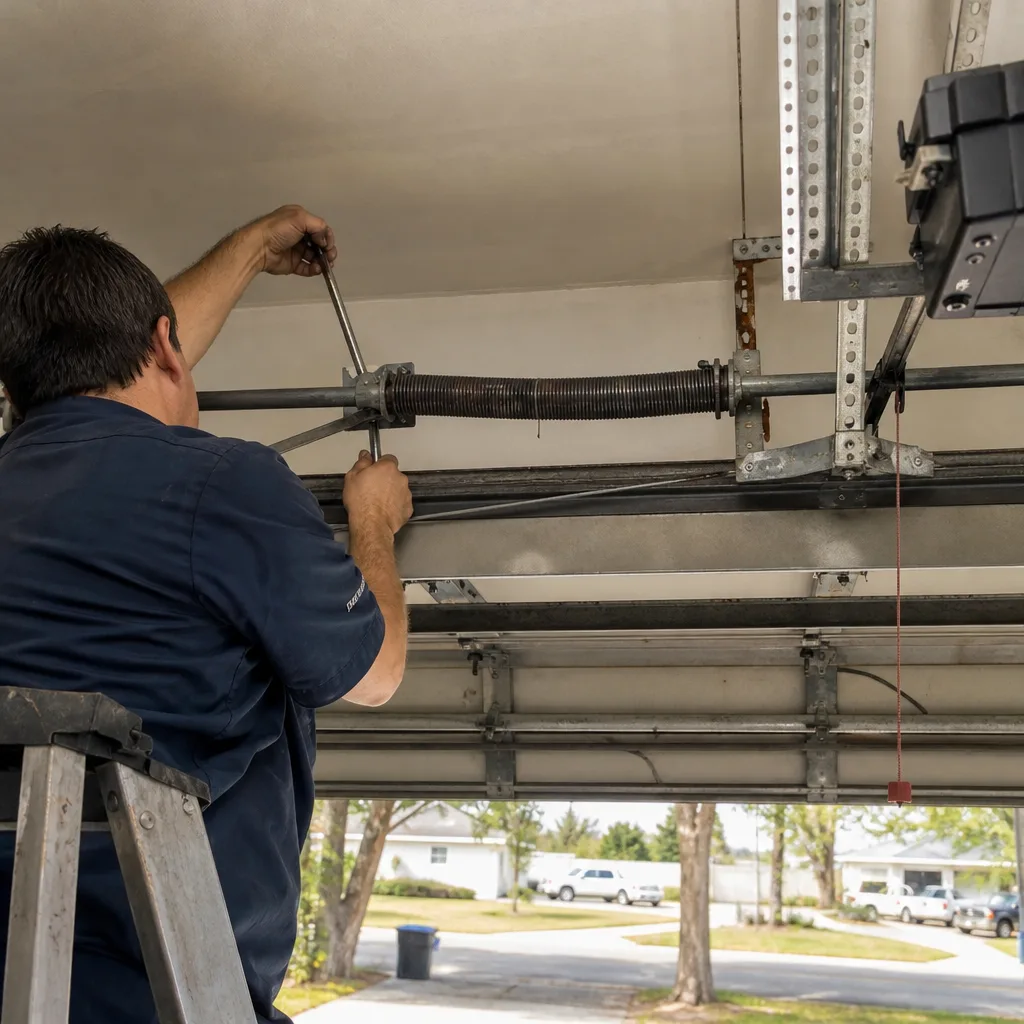
A broken spring is the most common urgent repair. The spring counterbalances the entire weight of the door, which on a double-car door can exceed 300 pounds. The spring snaps, and the door either won’t open or slams shut. Most West Palm Beach homes use torsion springs mounted above the door opening, and these need replacement in pairs, even if only one broke. Replacing only the broken spring leaves the other aging spring with unequal tension, which causes uneven door travel and premature failure. We carry springs rated for higher cycle counts than builder-grade units, which matters in a climate where springs fail earlier than manufacturer estimates.
2. Cable Repair or Replacement
Lift cables work with the springs to raise and lower the door evenly. In West Palm Beach, cables corrode and fray, and when one parts, the door drops crooked in the tracks. A door stuck at an angle is a hazardous situation, particularly a wooden door weighing more than 150 pounds. Cable replacement often accompanies spring work, because if the spring broke, the cable usually got whipped or damaged in the process. Both sides get replaced at once so tension stays balanced.
3. Opener Motor and Logic Board Repair
Humidity is the great opener killer here. We repair far more opener units in West Palm Beach than in drier inland Florida cities. The symptoms vary: the opener hums but won’t move, it runs but reverses immediately, the remote works intermittently, or the wall button does nothing. Some failures are mechanical, like a stripped gear inside a Chamberlain or LiftMaster unit. Others are electrical, like a corroded logic board on a Genie or Raynor opener. A specialist who works on openers daily can diagnose the difference in one visit, and many of these repairs don’t require replacing the whole unit.
4. Track Alignment and Roller Replacement
Misaligned tracks make the door grind, stick, or jump. In Palm Beach County, track brackets corrode and loosen, especially where the track runs near the garage floor and gets splashed with rainwater. Rollers wear out, too. Steel rollers corrode and seize. Nylon rollers are a better choice for this climate and run quieter. A door that shudders as it moves is almost always a track or roller issue, and ignoring it accelerates wear on the opener motor, which has to work harder to move the same door.
5. Panel and Section Repair
Hurricane season dents panels with flying debris, and daily use takes its toll. Steel panels can be repaired if the damage is cosmetic, but impacted panels that affect structural integrity usually need replacement. Wooden doors in West Palm Beach face a different issue: they swell in the rainy season and contract in the dry season, which can cause the door to bind or warp. Replacing individual sections is often possible when the rest of the door is in good shape, and that’s substantially less expensive than a full replacement.
6. Weather Seal and Bottom Seal Replacement
Seals are a consumable, not a permanent fix. Florida sun breaks down rubber and vinyl, and a hairline crack in a bottom seal becomes an entry point for rainwater and humid air. Replacing seals is straightforward, but the replacement material matters. We use UV-stabilized vinyl and aluminum retainer bars that hold up longer in South Florida conditions. Sealing a garage properly also reduces the humidity load on everything stored inside, including your car, your tools, and any electronics.
7. Sensor and Safety Reverse Repair
Photo-eye sensors at the bottom of the door tracks are a safety feature required by federal law since 1993. If the beam is blocked, misaligned, or the sensor is malfunctioning, the door won’t close, or it reverses when nothing is in the way. Humidity can corrode sensor wiring connections in a West Palm Beach garage. Sometimes the fix is cleaning the lens. Sometimes the sensor needs realignment or replacement. A door that won’t stay closed is a security issue, not just an inconvenience, so this repair usually feels urgent to homeowners.
If you’re dealing with any of these and want a specialist to look at it, we cover repair, opener service, and full installation from our West Palm Beach Garage Door Co home base, and we work on whatever brand is already on your home.
What Garage Door Repair Costs in West Palm Beach
Garage door repair pricing in West Palm Beach runs slightly higher than the national average, and it’s not because companies are inflating their rates. The climate creates more labor-intensive repairs, the cost of doing business in Palm Beach County is higher than in most of the country, and properly rated components for hurricane-zone applications cost more than standard parts. Here’s what you can expect to pay for the most common repairs:
| Repair Type | Typical Cost Range in West Palm Beach | Notes |
|---|---|---|
| Torsion spring replacement (pair) | $180 – $340 | Price varies by door weight and spring cycle rating |
| Cable replacement (both sides) | $120 – $220 | Often combined with spring work |
| Opener logic board or gear repair | $150 – $400 | Depending on opener brand and failure type |
| Track realignment | $100 – $200 | Includes roller inspection |
| Roller replacement (full set) | $90 – $160 | Nylon rollers cost more than steel, last longer here |
| Panel replacement (per section) | $250 – $500 | Excludes wood specialty doors |
| Bottom seal replacement | $60 – $120 | Material and labor included |
| Sensor replacement | $80 – $150 | Per pair of photo-eye sensors |
| Service call / diagnostic | $50 – $100 | Often waived when repair is completed |
Here’s the key point on pricing: the quote you receive should be the price you pay, and it should be agreed before any work starts. Every reputable garage door company in West Palm Beach operates this way. If a technician refuses to quote before beginning work, or says he’ll “see how it goes,” stop the visit. The same applies to parts. A spring rated for 20,000 cycles costs more than a 10,000-cycle spring, and a quality difference like that should be explained in the quote, not discovered on the invoice.
For a specific number on your repair, call (877) 265-9120 for a free estimate. We quote before we touch anything.
Florida Building Code: What West Palm Beach Homeowners Must Know
Palm Beach County sits in a High Velocity Hurricane Zone, and that designation carries specific requirements for garage doors that most national guides never mention. If your garage door is replaced, the new door must meet wind-load requirements established by the Florida Building Code. This isn’t optional, and it’s not a company upselling you. It’s state law and county code, and it exists because garage doors are the largest single opening on most homes, and a door that fails in a hurricane lets wind pressure inside the structure, which blows roofs off.
Here’s what that means for repairs and replacements in West Palm Beach:
- Wind-load ratings apply to new installations and major replacements. A full door replacement must use a door rated for the specific wind-load requirements of your property’s location. Homes in coastal exposure zones have higher requirements than inland properties.
- Repairs to existing doors don’t automatically trigger a code upgrade. Replacing a spring, cable, or roller on an existing door is a repair, not a new installation. You’re not required to upgrade the door’s wind rating for these fixes.
- Structural modifications do trigger code review. If you’re widening the opening, changing from a single to a double door, or modifying the header, the new installation must meet current code for wind load, impact resistance, or shutter requirements.
- Impact-rated doors are common in West Palm Beach. Many homeowners choose impact-rated doors that don’t require separate hurricane shutters. These doors cost more than standard wind-rated doors, but they eliminate the need to manually deploy shutters before a storm.
- Permits are required for new installations. Any new garage door installation in West Palm Beach requires a building permit. A licensed contractor handles this. If you’re told a permit “isn’t necessary,” find another contractor.
We handle full installation according to current Palm Beach County requirements, and we’ll explain exactly what your project needs before any work begins. If you’re outside West Palm Beach proper, the same rules apply throughout the county. For example, Garage Door Installation in Loxahatchee Groves follows the same Florida Building Code wind-load requirements.
Seasonal Repair Patterns: Rainy Season vs. Dry Season
Garage doors in West Palm Beach don’t fail on a random schedule. They follow the weather. We’ve tracked enough repair calls over the years to see clear seasonal patterns, and knowing them helps homeowners anticipate problems before they become emergencies.
Rainy season (May through October): This is our busiest stretch for opener failures, cable breaks, and track problems. The humidity peaks, afternoon thunderstorms dump water on garage door openings, and the daily cycle of heat and moisture takes its toll on metal components. Wooden doors swell, which makes them bind in the tracks. The opener motor strains against the extra resistance, and motors that were marginal in February give out in August. We also see a spike in sensor issues during the rainy season, caused by corrosion on wiring connections and occasional lightning-related power surges.
Dry season (November through April): This is when wooden doors contract, and the same door that was binding in August suddenly has gaps around the edges. Weatherstripping that was compressed all summer springs back, and homeowners notice drafts. The dry season is also when we see the most spring failures. The cooler air makes metal springs slightly more brittle, but more importantly, the corrosion that accumulated during the humid months has had months to work. Many springs snap during the first cold front of November, when the door is suddenly operated at a slightly different tension than it was all summer.
What does this mean for you? Two things. First, an annual inspection in October or April catches problems between extreme weather patterns, before they become emergencies. Second, if you notice your door behaving differently as the seasons shift, don’t ignore it. A door that binds in August isn’t going to “settle.” It’s telling you something is wrong, and the fix is cheaper in month one than in month six.
Documenting Repairs for Insurance and Hurricane Claims
If you own a home in West Palm Beach, your insurance policy almost certainly has a separate hurricane deductible, often calculated as a percentage of your home’s insured value. That means a garage door damaged in a storm may be a claim you can file, but only if you document everything properly. Here’s the process that protects you:
- Photograph everything before any repair begins. Take wide shots showing the entire door and close-ups of the specific damage. Include a timestamp if possible. These photos establish the pre-repair condition for your adjuster.
- Keep the damaged parts. Do not let anyone haul away a bent track, a snapped spring, or a dented panel until your claim is resolved. The adjuster may want to inspect them.
- Get a written diagnosis. Your repair technician should provide a written description of what failed, why it failed, and whether the damage is consistent with a single event like a hurricane, as opposed to long-term wear and corrosion. Insurance covers storm damage. It does not cover corrosion that happened over years.
- Request an itemized invoice. The invoice should separate labor from parts, list each component replaced, and note whether the replacement parts meet current Florida Building Code requirements. This matters because your policy may cover the cost of code upgrades after a covered loss.
- File the claim before authorizing major repairs. For urgent safety issues like a door that won’t close, do what’s needed to secure your home and document everything. For non-urgent repairs, check with your insurer first about their process for pre-approval.
A note on flood versus wind coverage: standard homeowners insurance covers wind damage from hurricanes. Flood damage is a separate policy, usually through the National Flood Insurance Program. If your garage flooded and the door was also wind-damaged, you may be filing two claims with two adjusters. Document both types of damage separately.
What You Can Safely Check Yourself (And What You Shouldn’t Touch)
Some garage door maintenance is genuinely DIY. Some is genuinely dangerous. Knowing the difference matters, because the dangerous parts are responsible for serious injuries every year, including in West Palm Beach. Torsion springs are under enormous tension, enough to cause severe injury or death if they release suddenly. Cables under load behave the same way. If your problem involves a spring, a cable, or anything connected to them, call a professional. This is not a place for YouTube tutorials.
Here’s what you can safely inspect yourself:
- Visual inspection of hardware: Look at the hinges, brackets, track bolts, and roller condition with the door closed. Rust blooms, loose bolts, and cracked welds are visible from the ground.
- The balance test: Pull the emergency release cord (with the door closed) and try to lift the door manually. A properly balanced door should lift smoothly with modest effort and stay in place about halfway up. If it’s heavy or drops, the springs need attention from a technician.
- Photo-eye alignment: Check that the sensors on either side of the track are pointed at each other and the small indicator lights are on steady, not blinking. Wipe the lenses with a dry cloth.
- Lubrication: Apply a silicone-based garage door lubricant to hinges, rollers, and springs. Avoid WD-40, which displaces moisture but doesn’t lubricate long-term. Lithium grease works for the opener rail.
- Seal inspection: Run your hand along the bottom seal and side weatherstripping to check for cracks, gaps, or brittleness. Replacement seals are inexpensive and prevent larger moisture problems.
What you should not touch: torsion springs, extension springs, lift cables, and any bracket that’s under tension. Also avoid adjusting the opener’s force settings unless you know exactly what you’re doing. A force setting that’s too high is the difference between a door that reverses on a bicycle tire and a door that crushes it.
Common Mistakes to Avoid
- Treating a squealing door as a minor annoyance. That squeal is usually metal-on-metal contact at the hinges or rollers, and in West Palm Beach’s humidity, it means the lubrication is gone and corrosion is starting. Spraying it with WD-40 silences the symptom and does nothing for the cause. Proper lubrication and, if needed, hinge or roller replacement is the fix.
- Replacing only one spring. Both torsion springs are under identical load. Replacing only the broken one leaves a spring with half its useful life already gone, and the tension imbalance causes uneven door travel. Replace both, and have the technician explain the difference in cycle ratings before choosing.
- Buying a big-box opener for a hurricane-zone install. Not every opener sold at retail is appropriate for every West Palm Beach home. A door that’s heavier because it’s wind-rated needs an opener with the right horsepower and reinforced mounting. Installing an undersized opener means premature motor and gear failure.
- Skipping the permit on a new installation. An unpermitted garage door installation becomes a problem when you sell the house, file an insurance claim, or get flagged during a wind mitigation inspection. The permit exists for a reason, and the cost is minimal compared to the headaches.
- Ignoring a door that’s hard to lift manually. If you pull the emergency release and the door feels like it weighs 200 pounds, the springs are failing. That’s not normal door weight, it’s a component that’s about to break. Call a technician before it snaps at an inconvenient moment.
- Using a non-garage-door contractor for structural work. A general handyman can change a light fixture. A garage door specialist knows spring tension math, track geometry, opener force settings, and Palm Beach County code requirements. Garage doors are all we do, and the difference shows in the diagnosis.
- Waiting until hurricane season to replace an aging door. The busiest time for garage door companies in West Palm Beach is May through July, when homeowners suddenly remember that hurricane season has started. If your door is old and questionable, the dry season months of November through February offer faster scheduling and more availability.
When to Call a Professional
Call a professional when the problem involves springs, cables, or anything under tension. Call when your opener is behaving inconsistently and you’ve ruled out remote batteries. Call when your door is visibly crooked in the tracks, when it’s become dramatically heavier to lift manually, or when you’ve done the basic checks and nothing has changed. Call when you’re buying a new door and want a wind-load compliant installation that meets Palm Beach County code. And call when you want an annual inspection to catch corrosion before it becomes a breakdown. For The Complete Guide to Garage Door in West Palm Beach, see our full resource. West Palm Beach Garage Door Co offers free estimates in West Palm Beach and the surrounding area. Call (877) 265-9120 to schedule a visit. We work on whatever brand is on your home, from the panels to the opener, we cover the whole system.
Frequently Asked Questions
Spring replacement in West Palm Beach typically costs $180 to $340 for both torsion springs, installed. The price varies based on the door’s weight and the spring’s cycle rating. Higher-cycle springs cost more upfront and last substantially longer, which matters in Florida’s corrosive environment. Call (877) 265-9120 for an exact quote. Estimates are free and quoted before any work begins.
Yes, most common repairs are completed same-day when parts are in stock. We carry the major components for LiftMaster, Chamberlain, Genie, and Raynor systems on the truck, which lets us complete most spring, cable, and opener repairs in a single visit. Back to working order, the same visit.
No permit is required for repairs to existing doors, including spring replacement, cable work, track realignment, and opener repair. Permits are required for new door installations, and any licensed contractor will handle that paperwork as part of the project.
Florida’s humidity and salt air accelerate corrosion on spring steel. Rust creates micro-pitting that concentrates stress, and a spring rated for 10,000 cycles in a dry climate may snap at 4,000 to 6,000 cycles in West Palm Beach. This is the single most common repair we handle, and it’s a direct result of the local environment.
Wind damage to a garage door is covered under standard homeowners insurance, subject to your hurricane deductible, which in Florida is typically a percentage of your home’s insured value. Document the damage with photos, keep the damaged parts, and get a written diagnosis before disposal. Corrosion damage that accumulates over years is generally not covered.
LiftMaster and Chamberlain openers have the strongest track record in South Florida’s humid climate, based on what we repair and replace. That said, the installation quality matters as much as the brand. A properly mounted and ventilated opener will outlast a premium unit installed poorly. We service whatever opener is on your home: LiftMaster, Chamberlain, Genie, Raynor, and most others.
The Bottom Line
Garage door repair in West Palm Beach is a different animal than in most of the country. The humidity, the salt air, the hurricane code requirements, and the seasonal swings all combine to create a specific set of failure patterns that a generic repair guide simply doesn’t address. Knowing what breaks, why it breaks, and what it should cost to fix puts you ahead of most homeowners. And when it’s time to fix it, a specialist who handles repair, opener service, and full installation is the difference between a correct diagnosis and a guess. Whatever brand is on your garage, we know it. Call (877) 265-9120 for a free estimate, or Garage Door Repair in Loxahatchee Groves and Garage Door Opener Repair in Loxahatchee Groves for service in that area.
Written by the team at West Palm Beach Garage Door Co, serving West Palm Beach since 2013. Explore more guides & resources on our blog.
See the difference
 Before
 After
 Before
 After
 Before
 After